Reading Your Cat’s Body Language: A Complete Field Guide
Almost every “sudden attack” story I hear follows the same pattern: when we trace back through exactly what happened, the cat gave multiple clear signals before biting or scratching. The owner simply didn’t know how to read them.
Cats are not subtle communicators — not once you speak their language. The challenge is that their communication system is almost completely unlike ours. Let me walk you through what twelve years of daily feline work has taught me.
The Tail: Your Real-Time Mood Indicator
If I had to watch only one body part, it would be the tail. It’s the most reliable and expressive indicator of a cat’s moment-to-moment emotional state.
Tail High and Vertical
This is the greeting signal — the feline equivalent of a warm hello. When your cat approaches with their tail straight up, sometimes with a slight curl at the tip, they are genuinely happy to see you. Kittens use this signal with their mothers; adults use it with trusted humans. If your cat consistently greets you this way, that’s meaningful information about how they feel about you.
Tail Puffed Like a Bottle Brush
An autonomic fear or high-agitation response. The cat is not choosing this — it’s a reflexive response to perceived threat designed to make them appear larger. Never approach a cat with a fully puffed tail. Give space, create escape routes, let them settle on their own timeline.
Tail Lashing Back and Forth
This trips people up because it superficially resembles a dog’s happy wag. It is the opposite. Rapid tail movement signals irritation and overstimulation. If you’re petting a cat and the tail starts lashing, stop immediately. This is the last warning before a scratch or bite. Most “unprovoked attacks” are preceded by this signal, missed by the owner.
Tail Tucked Low
Anxiety, submission, or physical discomfort. A cat carrying their tail close to the body or between the legs is not relaxed. Investigate what’s happening in the environment.
Slow, Gentle Sway
Focused concentration — watching prey, a bird, an interesting bug. Not a stress signal. Pure hunter’s attention.
The Ears: Precise Directional Indicators
Cat ears rotate approximately 180 degrees. Learning to read their position gives you real-time access to what a cat is attending to and how they feel about it.
Forward and Relaxed
Alert and comfortable baseline. The cat is engaged with their environment without tension.
Rotated Sideways (Airplane Ears)
Increasing anxiety or irritation. The yellow warning light. Something in the interaction or environment needs to change before it escalates. Stop petting, create distance, or remove the stressor.
Fully Flat Against the Head
Red alert. Defensive fear or imminent aggression. Do not reach toward this cat. Give space and an unobstructed escape route.
The Eyes: Trust and Arousal
The Slow Blink
One of the most important things I teach every new cat owner: a slow, deliberate blink — eyes closing almost completely, then reopening — is a signal of trust and relaxed affection. Cats use this with cats they trust and with humans they feel safe with. Slow blink back. You’re genuinely communicating. Many cats will respond in kind, and the moment of connection you feel is not projection — it’s real interspecies communication.
Dilated Pupils
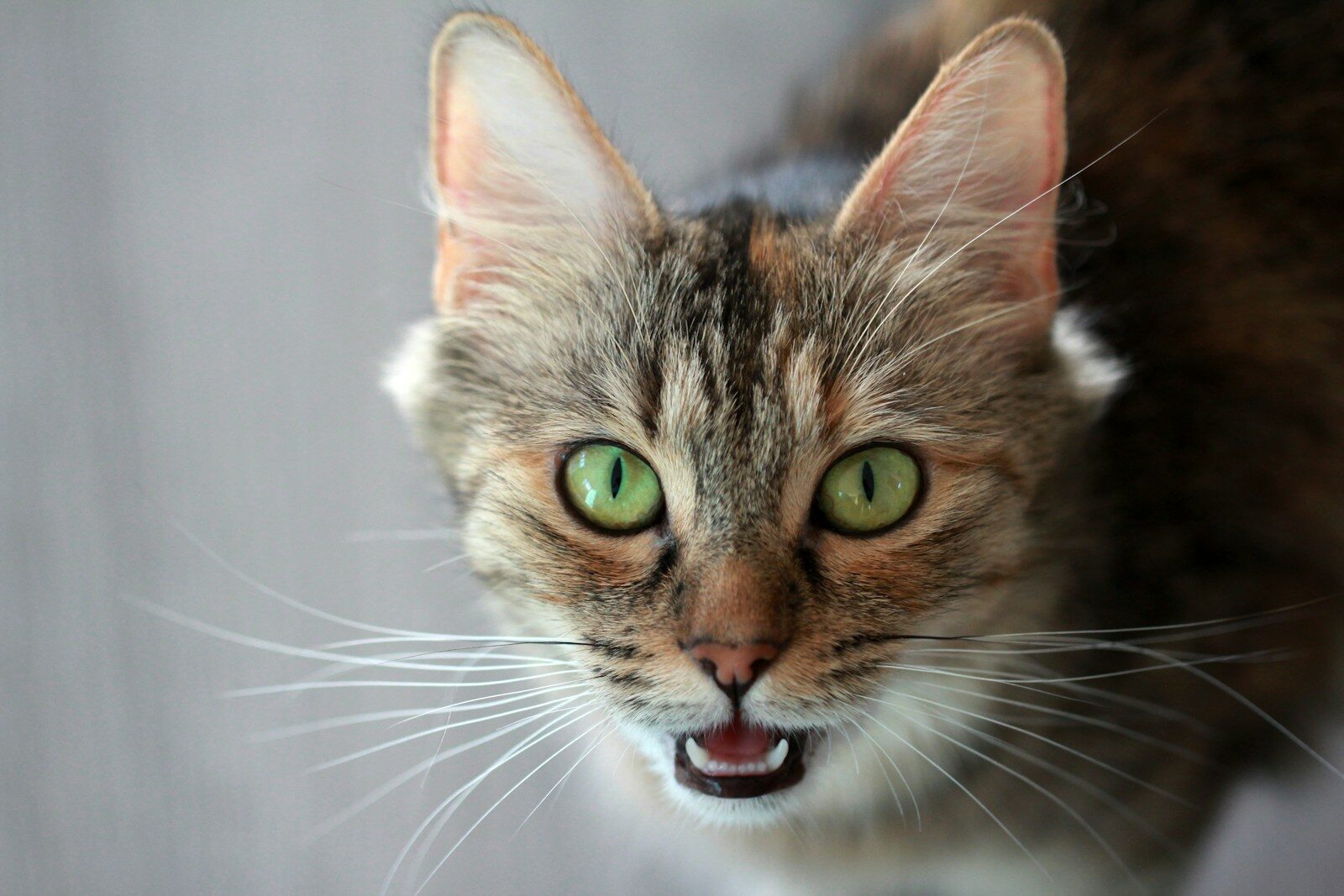
High arousal — which could be play excitement, fear, or aggression. Context is everything. Dilated pupils during a play session with a feather toy is normal excitement. The same pupils on a crouched, tense cat in an unfamiliar environment signal fear. Never read the eyes in isolation.
Half-Closed, Soft Eyes
Contentment. You’ll see this in a sunbeam, during a petting session that’s going well, or when they’re resting somewhere they feel utterly safe. The feline equivalent of a contented sigh.
Hard Unblinking Stare
A direct stare is a dominance or challenge signal in cat social dynamics. With an unfamiliar cat, break eye contact — it signals non-threat. With your own bonded cat in an otherwise relaxed context, it might be simple curiosity. Read the whole body, not just the eyes.
Body Posture: The Complete Picture
The Loaf
Paws tucked under the body, sitting still. Relaxed but alert. Good baseline state — nothing to address.
The Belly Roll
The most misunderstood signal in all of cat ownership. When a cat rolls to show their belly, they are expressing deep trust — their belly is their most vulnerable area. This is emphatically not an invitation to touch the belly. The message is “I feel completely safe with you,” not “please rub here.” Many cats find belly contact aversive even when they’re showing trust. Some tolerate it; learn over time whether yours is one of them.
The Halloween Cat Pose
Arched back, all fur raised, body turned sideways. Pure defensive fear, trying to appear as large as possible. Create space, create escape routes, do not approach.
The Full Relaxed Sprawl
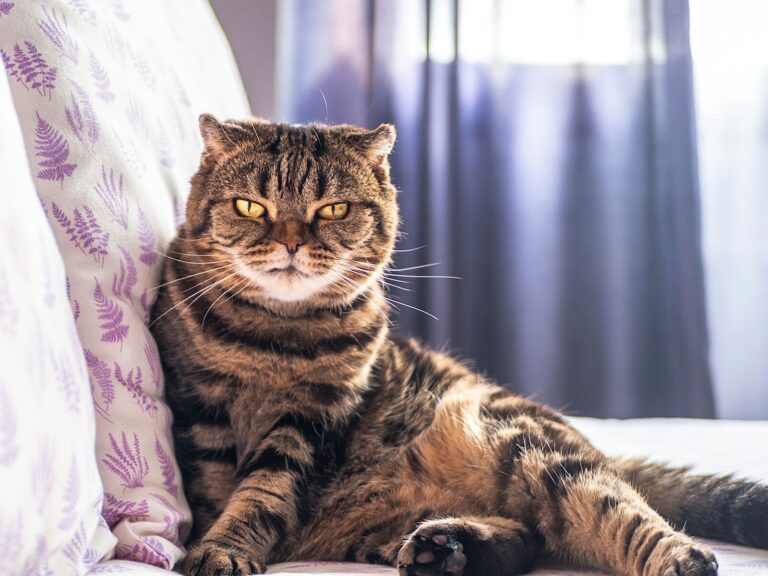
Lying on their side with limbs extended, eyes soft. Maximum relaxation. If your cat does this in your presence regularly, you are doing the relationship right.
Vocalizations
The Chirp and Chatter
That staccato sound when watching birds through a window. Hunting excitement combined with frustration. Normal predatory behavior, not a distress signal.
The Trill
A rising, musical sound used as a friendly greeting or attention-getting. Mothers use it with kittens. Well-bonded cats use it with trusted humans. A good sound to hear.
Growl or Hiss
“Back off immediately” in plain language. A growl is discomfort at high intensity. A hiss means “I will defend myself.” These should always be respected. Pushing past them is how serious injuries happen.
Prolonged Night Yowling in Seniors
Persistent vocalization, especially at night, in older cats can indicate cognitive dysfunction, pain, hypertension, or hyperthyroidism. If this is new behavior in a cat over ten, it warrants a veterinary evaluation — not just a noise problem to manage.
Reading the Whole Cat
The key skill is integrating all signals simultaneously. A cat with a high tail, forward ears, slow-blinking eyes, and a trill is in a completely different state than a cat with a low tail, flat ears, dilated pupils, and a growl — even if both are standing in the same spot. Training yourself to take in the whole animal at once, rather than focusing on single features, is what shifts cats from “mysterious and unpredictable” to “clearly communicating all the time.” Give yourself a week of paying focused attention to these signals. You’ll be surprised how quickly it becomes second nature.