How to Help an Anxious Cat: Techniques That Actually Work
Anxiety in cats is underrecognized largely because we don’t always know what we’re looking at. A cat who hides most of the day, who startles at ordinary sounds, who grooms excessively until bald patches form, who urinates outside the litter box — these behaviors are sometimes labeled as “quirky” or “personality” when they’re actually expressions of chronic anxiety that deserve attention and intervention.
Recognizing Cat Anxiety
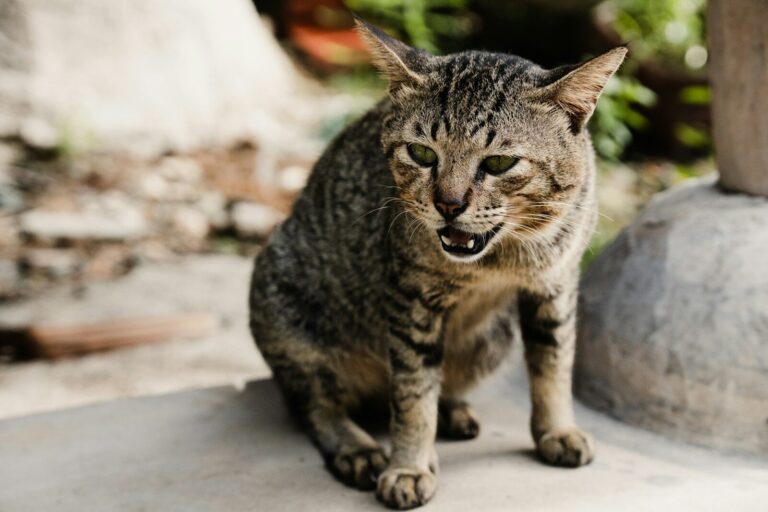
Anxiety in cats manifests in three main ways: behavioral changes, physiological responses, and displacement behaviors. Behavioral signs include hiding more than usual, reduced exploration, startle responses to ordinary stimuli, reduced play interest, changes in vocalization, and altered interaction with family members. Physiological signs during acute anxiety include dilated pupils, piloerection (fur standing up), rapid breathing, and elimination accidents. Displacement behaviors — actions that seem out of context for the situation — include excessive grooming, repetitive behaviors, and eating non-food items (pica).
The distinction between a shy or reserved cat and an anxious cat is whether the behavior is causing the cat distress. A cat who prefers to observe from a distance but has good body language when interacting is often simply lower on the sociability spectrum. A cat who is compulsively overgrooming, permanently hiding, or unable to access food when a housemate is nearby is experiencing chronic stress that merits intervention.
Environmental Modification: The First Priority
Before any other intervention, audit the environment for anxiety-contributing factors. Predictability is the foundation of feline security — cats thrive on routine and become stressed when routines are disrupted. Is the feeding schedule consistent? Are rest locations and litter boxes reliably accessible and not subject to sudden change? Are there adequate numbers of resources for the number of cats in the home?
In multi-cat households, resource competition is the most common driver of chronic stress. Insufficient litter boxes, a single feeding station where cats must compete, a lack of separate resting areas — these create an environment of chronic low-level tension that manifests as anxiety in subordinate cats. Adding resources and distributing them spatially often produces dramatic improvement within weeks.
Vertical space and hiding opportunities are critical environmental interventions. A cat who can get above a threat or out of sight of a stressor has a coping mechanism. A cat with no vertical options and no retreat spaces has no way to regulate their stress level.
Pheromone Products
FELIWAY Classic synthetic pheromone diffusers release a synthetic version of the feline facial pheromone — a signal cats deposit by cheek-rubbing on objects they find safe and familiar. Research on these products is mixed but generally supports modest anxiety-reducing effects in stressed cats. They’re not a replacement for environmental management or behavioral intervention, but they can reduce the ambient stress level as part of a comprehensive approach.
Place diffusers in the areas the cat uses most. Replace monthly. Expect subtle effects rather than transformation — in my experience, they take the edge off rather than eliminate anxiety, but that edge can make behavioral interventions more effective.
Systematic Desensitization and Counter-Conditioning
For anxiety linked to specific triggers — particular people, sounds, situations — the evidence-based behavioral intervention is systematic desensitization (SD) paired with counter-conditioning (CC). SD involves exposing the cat to the anxiety trigger at a very low intensity — below the threshold that produces the fear response — and gradually increasing exposure over time as the cat’s comfort level grows. CC involves pairing each exposure with something the cat genuinely values, creating a new positive association with the previously feared stimulus.
Example: a cat who is frightened of unfamiliar visitors. Stage 1 — the visitor sits in a chair across the room from the cat, makes no eye contact, does not interact. The owner gives the cat high-value treats near the visitor’s proximity. Stage 2 — visitor tosses treats toward the cat from their chair. Stage 3 — cat voluntarily approaches the visitor for treats. Each stage happens at the cat’s own pace, and no stage advances until the previous one is fully comfortable. This process takes weeks to months. It works reliably.
Medication: When and Why
Anti-anxiety medication is underused in cats with significant anxiety, often because owners are resistant to “medicating personality.” I want to reframe this: a cat in chronic anxiety is experiencing chronic psychological distress. The medication doesn’t change personality — it reduces suffering and creates a neurological state in which behavioral interventions can actually work, because a highly anxious brain is not in a learning state.
Several pharmacological options are available for cats, ranging from short-term situational medications (for travel, vet visits, specific predictable stressors) to longer-term daily medications for generalized anxiety. These decisions require veterinary involvement — a behavior-oriented veterinarian, or in complex cases a veterinary behaviorist. The combination of medication and behavior modification consistently outperforms either alone for significant anxiety disorders in cats.
The Long View
Anxiety that has been present for years doesn’t resolve in weeks. Realistic expectations: meaningful improvement in three to six months with consistent application of appropriate interventions. Complete resolution, meaning a cat who is genuinely comfortable and low-stress rather than just less overtly anxious, can take a year or more. But the change is real, it improves the cat’s life substantially, and in my experience, owners who commit to the work consistently report it as one of the most rewarding things they’ve done for their cat.