Creating the Perfect Indoor Environment for Your Cat
Indoor cats live longer, safer lives than outdoor cats — but length of life doesn’t automatically mean quality of life. An indoor cat in an under-stimulating environment is a cat who is bored, frustrated, and often behaviorally problematic. Setting up the indoor environment thoughtfully is one of the most important things an owner can do, and it’s where I see some of the most dramatic behavioral improvements when I work with clients.
Vertical Space: Think Up, Not Just Out
This is the single most impactful change most people can make. Cats are vertical animals — they use height for safety, for surveying their territory, and for navigating around other animals. In the wild, the ability to climb is a survival tool. In the home, vertical space is a psychological resource.
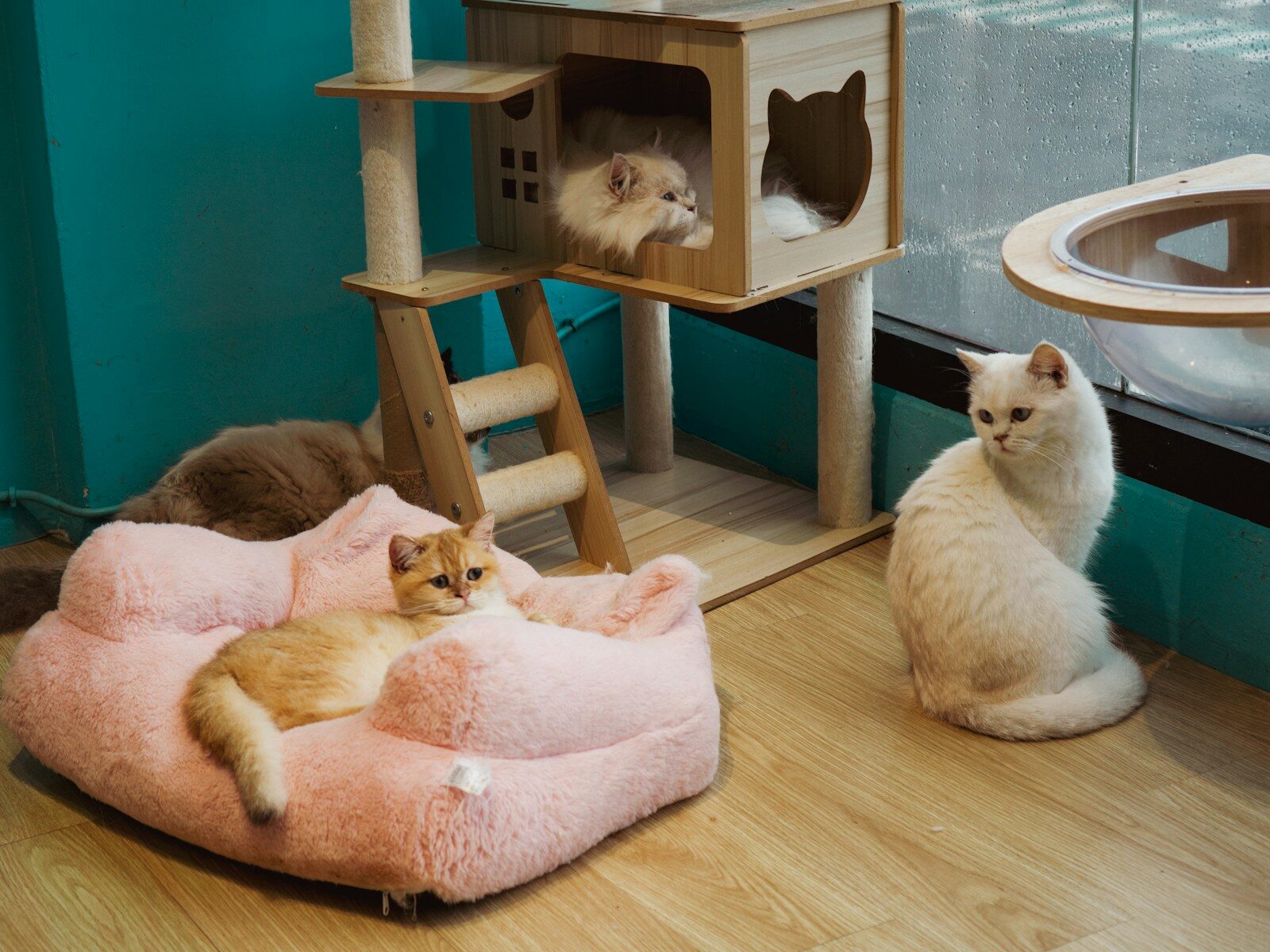
Cat trees, wall-mounted shelves arranged as climbing paths, and tall scratching posts all add vertical square footage to what might otherwise be a purely horizontal living environment. A cat who can access the highest point in a room feels significantly more secure and in control of their environment. This is especially important in multi-cat households, where vertical territory reduces social tension — subordinate cats can get above dominant cats, which defuses many would-be confrontations.
Position vertical options near windows. The combination of height and the visual stimulation of an outdoor view is essentially prime real estate for a cat.
Windows: The Cat Television
An accessible window with an interesting view is one of the highest-value environmental enrichments available at essentially zero cost. Bird feeders positioned outside windows transform a static view into hours of daily entertainment. A window perch or cat tree positioned at a window makes the viewing position comfortable and sustainable.
If your windows don’t have good wildlife views, consider a bird feeder on the outside. Within weeks you’ll have regular visitors, and watching them will occupy your cat for substantial portions of the day. I’ve recommended this to dozens of clients dealing with bored, destructive cats, and it consistently makes a real difference.
Hiding Spots and Safe Retreats
Cats need places where they can feel genuinely hidden — not visible from all sides. Covered beds, cardboard boxes with an entrance hole, the space inside a cat tree condo section, dedicated cat tunnels. These retreat spaces are critical for stress management. A cat who has no safe retreat is perpetually “on” in a way that creates chronic low-level stress.
In multi-cat households, the number of retreat spaces should exceed the number of cats. A cat who can always find a private space has a fundamentally different stress profile than one who is always visible and accessible to other animals.
Feeding Enrichment
Wild cats spend a significant portion of their day hunting — the physical and cognitive work of finding and capturing food. An indoor cat fed from a bowl twice a day gets zero of this stimulation. Puzzle feeders, food-dispensing toys, and hiding small amounts of food in multiple locations replicate some of that foraging work.
I recommend rotating puzzle feeders regularly to maintain novelty. A puzzle that’s too easy provides no engagement; one that’s too difficult creates frustration. Find the level where your cat has to work for a minute or two but ultimately succeeds. The satisfaction of solving a problem for food is genuinely enriching.
Scratching Opportunities Throughout the Space
Distribute scratching posts and pads in multiple locations rather than clustering them in one area. Different cats prefer different substrates and orientations. Having options — sisal vertical posts, horizontal cardboard pads, and even a tilted middle-ground option — accommodates individual preferences and territorial marking needs throughout the home.
Play Areas and Toy Rotation
Toys left out permanently become invisible to cats — novelty drives engagement. A simple toy rotation system, where you make a portion of toys available at a time and swap them out every few days, keeps interest significantly higher than permanent full availability. Store unused toys in a bag with a little catnip to restore novelty.
Active play with an interactive wand toy is irreplaceable and should happen once or twice daily. Even ten minutes of active play dramatically reduces frustrated or destructive behavior. The physical exertion, the simulation of a successful hunt (ending the session with a “catch”), and the direct engagement with you all contribute to a cat’s wellbeing in ways that passive enrichment alone doesn’t provide.
Social and Environmental Calm
Consider your cat’s perspective on the household’s noise and activity level. High-traffic, loud environments with frequent strangers, unpredictable schedules, or aggressive children can be chronically stressful for cats who need predictability and quiet access to their resources. Providing consistently accessible quiet retreats, maintaining some routine predictability, and protecting a cat’s safe spaces from intrusion are undervalued aspects of environmental management.
FELIWAY synthetic pheromone diffusers can reduce ambient anxiety in households with high stress levels — they’re not magic solutions, but they can take the edge off for cats who are sensitive to environmental stress. Use them as part of a broader approach, not a standalone fix.
The Minimum Viable Enrichment Package
If I’m recommending a baseline for every indoor cat: at least one tall stable scratching post in a prominent location, at least one high perch with a window view, at least one private retreat space, a daily rotation of food in a puzzle feeder or food toy for at least one meal, and one active play session with a wand toy per day. This minimum baseline addresses exercise, cognitive stimulation, territorial needs, safety, and social engagement. From this foundation, you can build as elaborately as your space and budget allow — but this baseline prevents the majority of the behavioral problems I see in under-stimulated indoor cats.