Cat Pregnancy and Newborn Kitten Care: A Complete Guide
Let me begin with the advocacy note I give every client with an intact female cat: spay your cat before she goes into heat. Feline overpopulation is a serious welfare crisis, shelters are overwhelmed, and there are far more cats needing homes than homes available. That said, if you find yourself with a pregnant cat, or if you’re working with a rescue organization caring for pregnant strays, this guide will help you navigate the process well.
Recognizing Pregnancy
A cat’s gestation period is approximately 63 to 67 days from conception. Early signs of pregnancy appear around three weeks after conception: the nipples become enlarged and more pink (called “pinking up”), the cat’s abdomen begins to round slightly, and she may experience brief morning sickness with occasional vomiting. By four to five weeks, the pregnancy becomes visible to observation in most cats.
Veterinary confirmation through palpation (feelable after day 20) or ultrasound is advisable to confirm the pregnancy, estimate litter size, and establish veterinary oversight. This is also the time to schedule any necessary health checks — a pregnant queen who is current on vaccines and free of parasites has a better pregnancy outcome.
Nutrition During Pregnancy
From the moment you confirm pregnancy, switch to a high-quality kitten food or a food labeled for “all life stages.” The higher caloric density and nutritional profile of kitten food supports both the growing kittens’ needs and the queen’s increased requirements. Free feed — allow continuous access to food — as the queen’s appetite will increase substantially, particularly in the final third of pregnancy when the kittens are growing most rapidly. Fresh water must always be available.
Preparing for the Birth
About one to two weeks before the due date, the queen will begin nesting — seeking enclosed, quiet, soft locations to give birth. Prepare a nesting box: a cardboard box or a large storage container with low sides (for easy maternal access), lined with clean washable bedding. Place it in a quiet, warm, private location. Introduce her to it gently — many queens will accept a prepared nest; some will choose their own location regardless. If she chooses her own location and it’s safe, work with her choice rather than forcing a change right before birth.
Labor and Delivery
Signs of imminent labor: the queen becomes restless, seeks her nesting spot, may vocalize, and her body temperature drops slightly (below 100°F/37.7°C) within 12 to 24 hours of delivery. Active labor involves visible contractions and typically produces kittens 15 to 30 minutes apart, though intervals up to 60 to 90 minutes are within normal range.
In most cases, the queen manages delivery without human assistance. Your role is to observe quietly from a distance, providing reassurance without intrusion. Each kitten is born in an amniotic sac that the mother bites through and licks vigorously — this stimulation is critical for getting the kitten breathing and warming them. She will eat the placenta, which is normal and nutritionally appropriate.
When to call the vet during labor: Active straining for more than 60 minutes without a kitten being produced; a greenish-black discharge before any kittens are born (normal after births but not before the first); an obvious kitten lodged in the birth canal; the queen becoming extremely distressed or collapse. These are emergencies.
Newborn Kitten Care: The First Weeks
Neonatal kittens are born helpless — eyes sealed, ears folded, unable to thermoregulate. Their survival in the first weeks depends entirely on maternal care and appropriate environmental conditions.
Temperature: Neonatal kittens cannot maintain body temperature. The nesting area should be maintained at 85 to 90°F (29 to 32°C) for the first week, reduced gradually over the following weeks. A heating pad on the lowest setting under half the nesting box, allowing kittens to move away from heat if needed, is a simple solution.
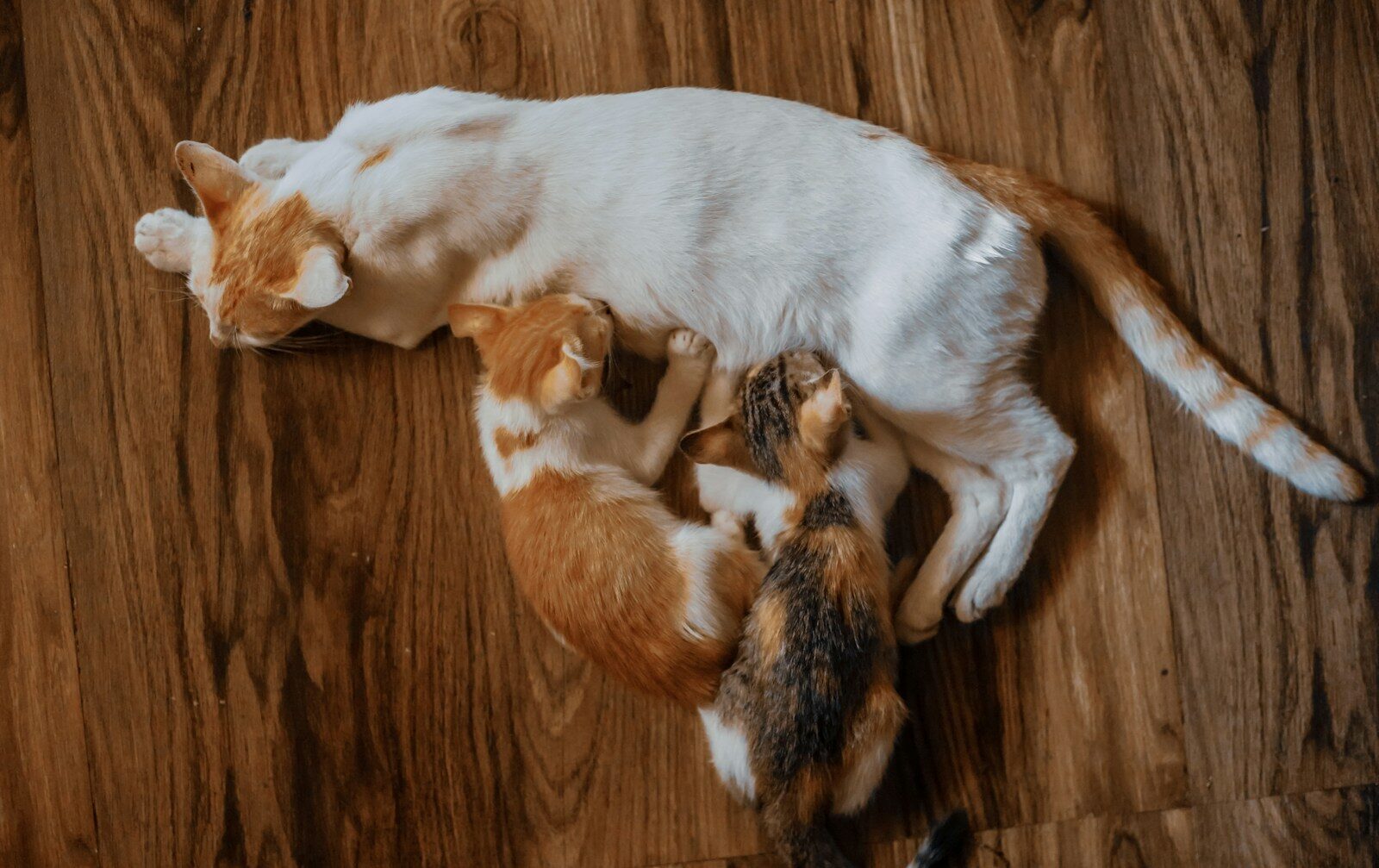
Feeding: Healthy, well-nourished queens provide adequate milk for most litters. Kittens nurse every 1 to 2 hours and should gain weight daily — a kitchen scale weighing in grams allows you to monitor this. Any kitten who is not gaining weight or is losing weight needs veterinary attention immediately. If the queen cannot nurse (injury, illness, mastitis, or death), kittens require kitten milk replacer fed by bottle or syringe every 2 to 3 hours around the clock — this is intensive work and best done in consultation with a vet or experienced rescue volunteer.
Stimulation: Kittens cannot urinate or defecate independently for the first three weeks. The mother stimulates elimination by licking the anogenital area after each feeding. If you’re hand-raising orphaned kittens, replicate this with a warm, damp cotton ball after each feeding until they can eliminate independently, typically around 3 to 4 weeks of age.
Development Milestones
Eyes open at approximately 7 to 14 days. Ears open around two weeks. Kittens begin walking, albeit unsteadily, at around three weeks. Weaning begins at four to five weeks, with solid food introduction alongside continued nursing. Full weaning is typically complete by eight weeks, though some queens continue to nurse longer.
The socialization window — two to twelve weeks — is the period to begin gentle human handling as described in the socialization guide. Kittens raised with appropriate human contact during this period become well-adjusted adult cats.